Varicocele Embolization in Pakistan: The Non-Surgical Treatment Guide for Men
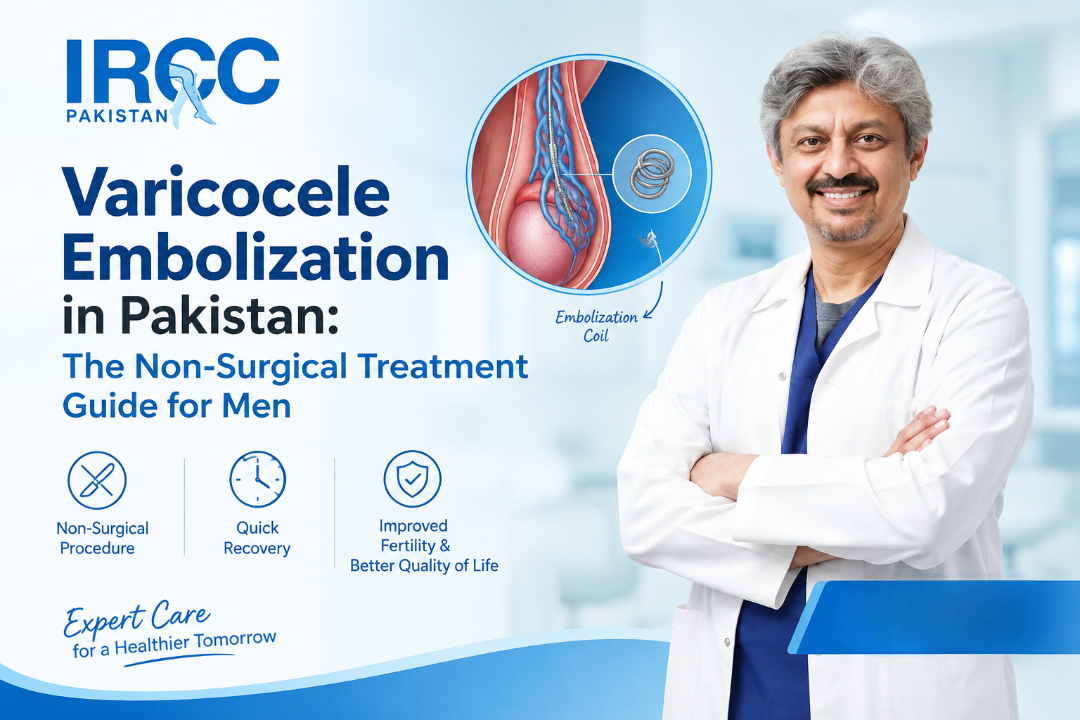
If you have been told you need surgery for a varicocele, it is worth knowing that is no longer the only option. Varicocele embolization is a non-surgical, image-guided procedure that treats testicular pain, swelling, and fertility issues without a single cut, without general anesthesia, and without the weeks of recovery that come with a varicocelectomy.
This guide walks through what a varicocele is, how embolization treats it, how it compares to surgery, and what to expect if you are considering it for pain, infertility, or simply wanting to avoid an operation.
What Is a Varicocele?
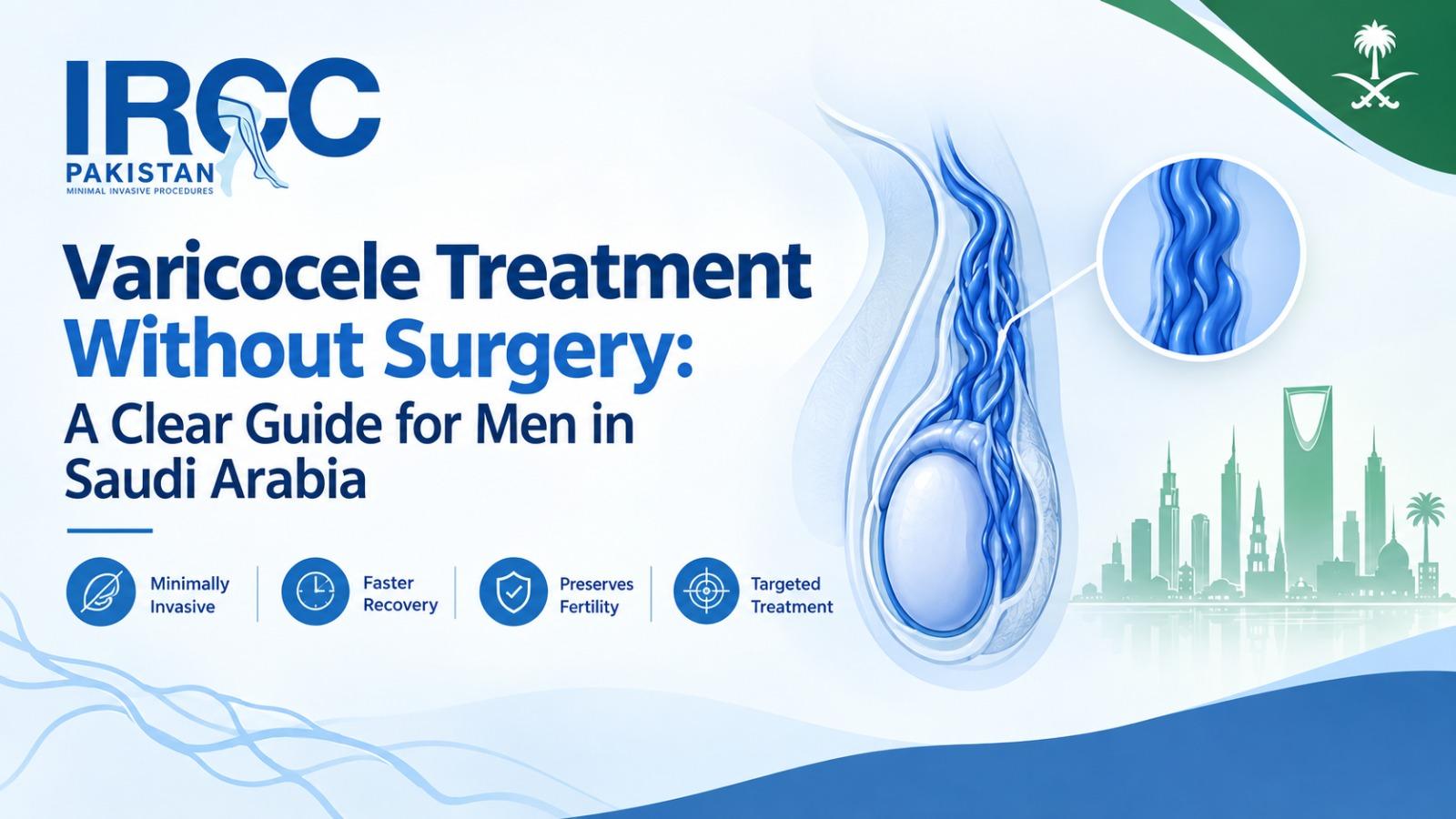
A varicocele is essentially a varicose vein inside the scrotum. It develops when the valves inside the veins that carry blood away from the testicle stop working properly. Instead of blood flowing back toward the heart the way it should, it pools inside the vein, and over time that vein enlarges.
Varicoceles affect roughly 10 to 15 percent of all men and show up most often between the ages of 15 and 35. Not every varicocele causes problems, but when it does cause symptoms, three things tend to show up.
- A dull, aching pain in the testicle or scrotum, usually worse after standing, exercise, or by the end of the day
- A visible or noticeable swelling, sometimes described as feeling like a bag of worms above the testicle
- Reduced sperm quality or count, which is why varicocele is closely tied to male infertility
Among couples struggling with infertility, close to 30 percent of the men involved have a varicocele. It is one of the few causes of male infertility that is actually treatable.
What Is Varicocele Embolization?
Varicocele embolization is a minimally invasive procedure performed by an interventional radiologist. Instead of cutting into the scrotum to tie off or remove the affected veins, embolization closes the faulty vein from the inside using image guidance.
- Local anesthetic and a mild sedative are given, with no general anesthesia involved.
- A small nick is made, usually in the groin or wrist, and a thin catheter is guided through the blood vessels using real-time X-ray imaging.
- Contrast dye is injected so the affected testicular vein can be seen clearly on screen.
- Small coils and/or a sclerosing agent are placed inside the faulty vein to block it off.
- Blood flow reroutes through healthy veins nearby, and the varicocele gradually shrinks and stops causing symptoms.
The entire procedure typically takes 45 minutes to an hour, and because it is outpatient, you go home the same day. There is no stitching required because the access point is small enough to close on its own.
This same embolization technique is used across several conditions treated at IRCC Pakistan, including uterine fibroid embolization and prostate artery embolization.
Varicocele Treatment Without Surgery: How Embolization Compares to Surgery
- Anesthesia: surgery is typically done under general or spinal anesthesia, while embolization uses local anesthesia and light sedation.
- Incision and scarring: surgery involves an incision and stitches, while embolization needs only a small needle access point.
- Recovery time: surgical recovery can take two to four weeks, while most men return to light daily activities within one to two days after embolization.
- Success rate: embolization has a success rate of around 90 percent, with a lower risk of complications such as hydrocele formation or damage to the testicular artery.
- Specialist: surgery is done by a urologist, while embolization is performed by an interventional radiologist trained in image-guided vascular procedures.
Some anatomical cases are better suited to a surgical approach, but for many men with a straightforward varicocele, embolization offers comparable results with considerably less disruption to daily life.
Varicocele and Infertility: Does Embolization Actually Help?
A varicocele raises the temperature around the testicle by a degree or two above normal, and sperm production is extremely sensitive to heat. That small temperature increase is enough to reduce both testosterone production and sperm quality.
Once the affected vein is embolized and blood pooling stops, that temperature effect goes away, and for many men, sperm parameters start to recover. Improvements in sperm count and quality are typically seen around the three-month mark after treatment.
Research on post-treatment pregnancy rates has found that somewhere between 30 and 50 percent of couples go on to conceive following varicocele embolization. Results vary, and a semen analysis plus scrotal ultrasound are needed to understand each case.
Varicocele Pain Relief: What Changes After Embolization
Varicocele pain tends to build gradually over the course of a day, especially with standing, walking, lifting, or exercise. Because embolization closes off the vein responsible for pooling and pressure, pain relief often follows as the varicocele shrinks.
Most patients notice a meaningful reduction in discomfort within days to a couple of weeks as swelling settles down. Mild soreness at the access site for a day or two is common and is usually managed with over-the-counter pain relief.
Who Is a Good Candidate for Varicocele Embolization?
- Adult men diagnosed with a varicocele, confirmed by physical exam and/or ultrasound
- Men experiencing testicular pain, discomfort, or a visibly enlarged varicocele
- Couples dealing with infertility where a varicocele has been identified as a contributing factor
- Men who prefer to avoid general anesthesia, an incision, and a multi-week surgical recovery
The best way to confirm candidacy is a consultation that includes a scrotal Doppler ultrasound, which shows the size and severity of the varicocele.
Recovery After Varicocele Embolization
Because there is no incision to heal, no muscle or tissue disruption, and no general anesthesia to recover from, most men are back to desk work and light activity within a day or two. Heavier physical activity is usually restricted for around a week to ten days.
Recurrence is possible but uncommon, and when it happens, the rate is similar to what is seen after surgical repair. Follow-up is usually recommended to confirm the varicocele has resolved and to repeat semen analysis if infertility was part of the concern.
Is Varicocele Embolization Right for You?
If a varicocele is causing pain, affecting fertility, or you have been told surgery is your only option, embolization is worth a serious look. Book a consultation with IRCC Pakistan for ultrasound review and a clear answer on your options.
Frequently Asked Questions
Is varicocele embolization painful?
No. The procedure is done under local anesthesia with a mild sedative, so there is little to no pain during the procedure itself. Some mild soreness at the access site is normal for a day or two afterward.
How long does varicocele embolization take?
The procedure usually takes 45 minutes to an hour, and since it is done on an outpatient basis, you go home the same day.
Will varicocele embolization improve my fertility?
In many cases, yes. Sperm count, motility, and quality often improve after treatment. Results vary by individual, and a personalised assessment is the best way to know what to expect.
Does varicocele embolization leave a scar?
No. It only requires a small needle access point at the groin or wrist, with no incision, no stitches, and no visible scarring.
How does varicocele embolization compare to surgery?
It offers a similar success rate, around 90 percent, with no general anesthesia, no incision, less risk of complications, and a faster recovery.
Can a varicocele come back after embolization?
Recurrence is uncommon, and the rate is comparable to surgical repair. Regular follow-up helps catch and manage this early if it happens.
Who performs varicocele embolization in Pakistan?
It is performed by an interventional radiologist, a specialist trained in image-guided, catheter-based procedures. IRCC Pakistan offers this treatment with clinics supporting patients across Pakistan.