Thyroid Lumps: Are They Cancer? Tests Explained
Reviewed by: Dr Shahbaz Ahmed Qazi (FCPS, FRCR, EBIR).
Quick answer: Most thyroid lumps are harmless, and thyroid cancer is quite rare in the UK. A doctor checks a thyroid lump with a blood test and an ultrasound scan. A needle biopsy is used when the scan shows features that need a closer look. Only a specialist can say which group a lump falls into.
Finding a lump in the front of your neck is worrying, and thyroid lump cancer is usually the first thing people think about. The honest answer is that most thyroid lumps are not cancer. Doctors call them thyroid nodules, and many are found by chance during a scan or a routine check-up, often with no symptoms at all. A proper assessment answers the question, and this guide explains the tests, what the results mean and when a specialist is needed. If a lump is found to need treatment, a specialist may discuss Thyroid Radiofrequency Ablation as one option for suitable lumps.
What is a thyroid lump?
The thyroid is a butterfly-shaped gland at the front of the neck. It makes thyroid hormones, which help control energy use, heart rate and body temperature. A lump inside the gland is called a nodule. The NHS describes many of these as harmless lumps on the thyroid, and they are one of several reasons the gland can look swollen.
A swollen thyroid is called a goitre. A goitre can be smooth or lumpy, and it can be caused by hormone changes, inflammation or a lump in the gland. Because the causes differ, a lump is never identified by looking at it alone. The tests explained below are needed to find the cause.
Thyroid lump cancer: how doctors assess the risk
Thyroid cancer is quite rare in the UK, according to the NHS. A lump is more likely to need a closer look if it is new, if it grows over time, if it feels hard, or if it comes with other symptoms. Your doctor also considers your history, such as a close family member who has had thyroid cancer, or radiation to the neck in the past, especially in childhood.
The NHS lists these as reasons to see a GP without waiting:
- a lump in the front, lower part of your neck, which is usually hard, slowly gets bigger and is not painful
- a hoarse voice that is not getting better
- difficulty swallowing that is not getting better
- pain in the front of the neck, or a feeling that something is pressing against it
Any one of these does not mean cancer. It does mean the lump should be checked properly, rather than watched at home for weeks.
Tests your doctor may order for a thyroid lump
The usual first steps are an examination of the neck, blood tests and an ultrasound scan. These tests are quick, widely available and each one answers a different question.
| Test | What it checks | Question to ask |
|---|---|---|
| Blood tests | Thyroid hormone levels, to see whether the gland is working normally | Are my thyroid hormone levels normal? |
| Ultrasound scan of the neck | The size and shape of the lump, its features, and the lymph nodes in the neck | What features did you see, and do they need a follow-up scan? |
| Needle biopsy (fine needle aspiration, FNAC) | A thin needle takes a small sample from the lump for a laboratory test | Does my scan need a biopsy, and what will it show? |
Why a biopsy is not needed for every lump
A biopsy is used when the ultrasound shows features that need a closer look. It is not needed for every thyroid lump. A biopsy is a short procedure with a small risk of bleeding or bruising at the site, so the decision is made by the specialist with you. Ask your doctor why a biopsy is or is not advised in your case.
What a blood test can and cannot tell you
A blood test shows how well the thyroid makes its hormones. It does not show whether a lump is cancer. A normal blood test is therefore not enough on its own, and an ultrasound scan and, where advised, a biopsy are still needed to answer the question about cancer.
How the thyroid works, and why hormone levels matter
The thyroid gland takes iodine from food and uses it to make thyroid hormones. These hormones act on almost every part of the body, including the heart, the muscles and the metabolism. If the gland makes too much or too little hormone, a person can feel tired, cold, anxious, or unusually warm and restless, depending on the direction of the change.
This is why a lump and the hormone levels are checked together. Most lumps do not change hormone levels, but some do, and the blood test is the way to find out. A specialist can then decide whether any treatment for the hormones is needed, which is separate from the decision about the lump itself.
Treatment options your doctor may discuss
Many thyroid lumps need only a check-up, with repeat scans over time. Treatment depends on whether the lump causes symptoms, whether it affects hormone levels, and what the tests show. The options below are discussed by a specialist and are not chosen from this article alone.
| Option | When it is discussed | Points to ask about |
|---|---|---|
| Watchful waiting with repeat scans | Lumps that look harmless and cause no symptoms | How often will the scan be repeated, and what would change the plan? |
| Thyroid hormone medicines | When the gland is making too much or too little hormone | Which test shows I need it, and what are the side effects? |
| Radiofrequency ablation | Some benign lumps that cause pressure, discomfort or a cosmetic concern | Is my lump suitable, and what is the recovery like? |
| Surgery | When cancer is suspected, or the lump is large and causing problems | What are the risks, and will I need thyroid hormone tablets afterwards? |
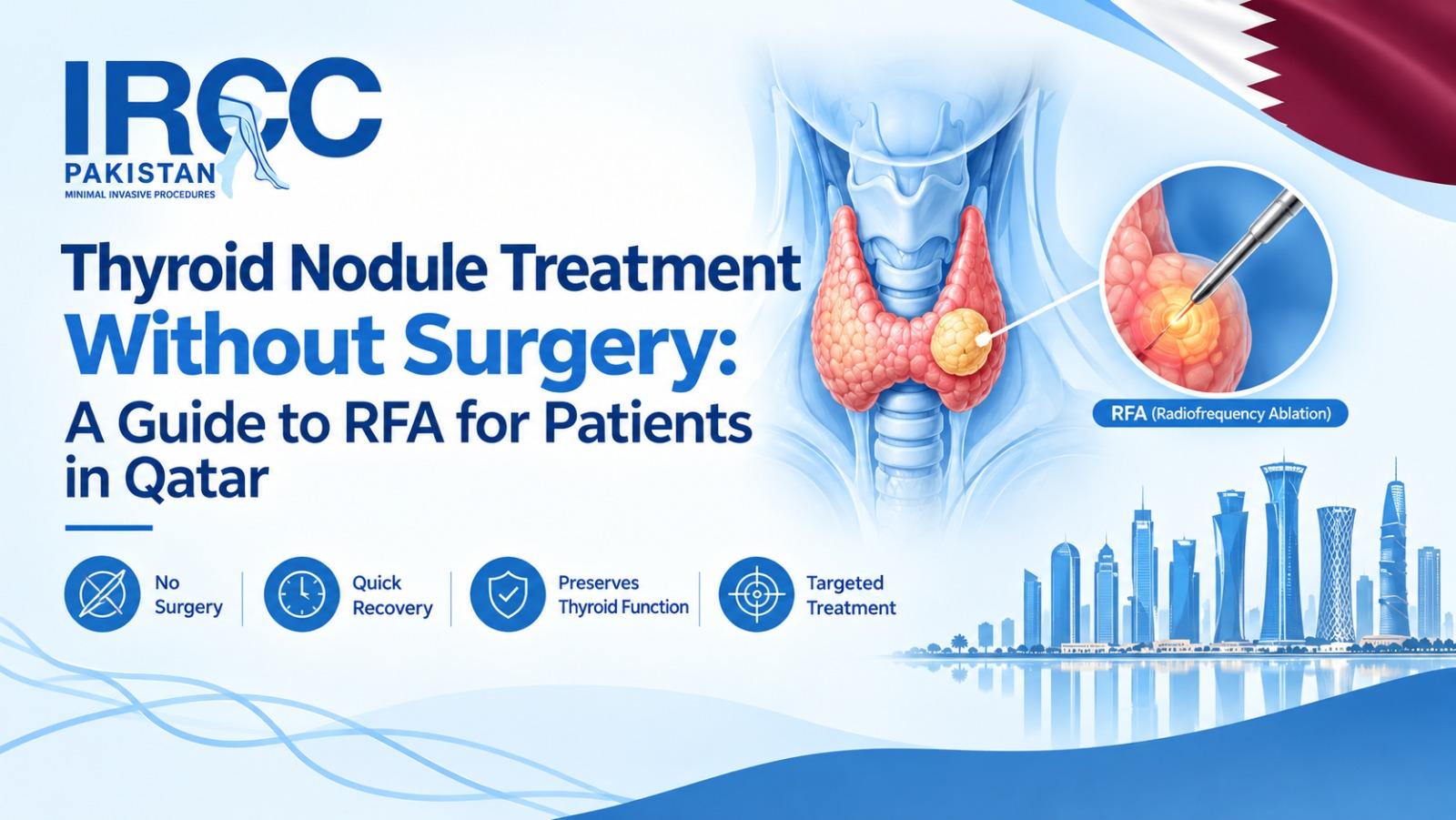
Patients from the Gulf often ask how thyroid nodule treatment works without surgery. The answer depends on the lump, and the guide is here: Thyroid Nodule Treatment Without Surgery: Qatar Guide. It explains what the decision involves, and what to ask before you travel.
Common myths about thyroid lumps
Several beliefs about thyroid lumps are not accurate. Clearing them up helps people decide when a check is needed and when it can wait.
Every thyroid lump is cancer
No. Most lumps are not cancer. A new lump should still be checked properly, because the tests are the only way to know.
A lump you cannot feel does not matter
Some lumps are found only on a scan, and they are often found by chance. Your doctor decides whether a follow-up scan is needed, based on the report.
A normal blood test rules out cancer
Blood tests check hormone levels. They do not show whether a lump is cancer, so the scan and, where advised, a biopsy are needed.
Thyroid lumps always need surgery
No. Many lumps need only a check-up, and other treatments are available for suitable lumps. Surgery is one option, used when the situation calls for it.
Questions to ask your doctor about a thyroid lump
A short list of questions makes the consultation clearer. Write the answers down, so that you can review them when you get home.
- What do you think this lump is, and what would make you want a biopsy?
- Does the lump affect my thyroid hormone levels, and do I need a blood test to check this?
- How often should the lump be scanned, and who will tell me the results?
- If treatment is suggested, what are the options, the risks and the recovery time?
- Who should I contact if a symptom changes before my next visit?
Living with a thyroid lump is easier when there is a clear plan. A written follow-up date, a named contact and a list of warning signs give you something to act on, rather than waiting and worrying. Most people find that the first scan answers many of their questions, and that the next steps are simple once the report is explained in plain words.
Practical steps while you wait for results
Simple steps make the next visit more useful. They do not replace medical advice.
- Keep all scan and blood test reports together, and bring them to every visit.
- Write down any new symptoms, such as a change in your voice or trouble swallowing, with the date you first noticed them.
- Ask for the scan report in writing, and ask what the next step is and when it will happen.
- Do not start thyroid tablets, herbal products or iodine supplements without medical advice, because they can change hormone levels.
What to expect at your first consultation
The doctor will ask about the lump, when you first noticed it, any change in your voice, swallowing or breathing, your family history and any past radiation to the neck. The neck is examined while you swallow, and a scan is arranged if the lump needs one.
Bring any previous scans or reports, your list of medicines, and a note of questions. A written summary after the visit is a sensible request, so that you can check the plan at home.
Related guides: Thyroid Nodule Treatment Without Surgery: Qatar Guide and Cold vs Hot Thyroid Nodules: What the Difference Means.
References
- NHS, Goitre (lumps on the thyroid, causes and tests): nhs.uk/conditions/goitre
- NHS, Thyroid cancer (symptoms, tests and when to see a GP): nhs.uk/conditions/thyroid-cancer
Frequently Asked Questions
Are thyroid lumps usually cancer?
No. Most thyroid lumps are harmless, and thyroid cancer is quite rare in the UK. A scan and, where needed, a biopsy give the answer for your lump.
Is a blood test enough to rule out thyroid cancer?
No. Blood tests check thyroid hormone levels. They do not show whether a lump is cancer, so an ultrasound scan and, where advised, a biopsy are still needed.
Does every thyroid lump need a biopsy?
No. A biopsy is advised when the scan shows features that need a closer look. Ask your doctor why it is or is not advised in your case.
When should I see a doctor about a thyroid lump?
See a GP if you notice a lump in the front of your neck, a hoarse voice that is not getting better, or difficulty swallowing that is not getting better.